Egglestone Abbey Ruins AKA Abbey Of St Mary And St John The Baptist (Egglestone Abbey)
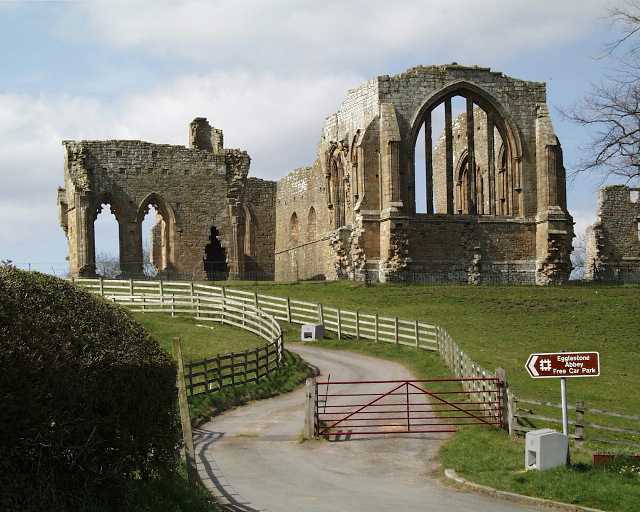
Egglestone Abbey Ruins © DCC 2002
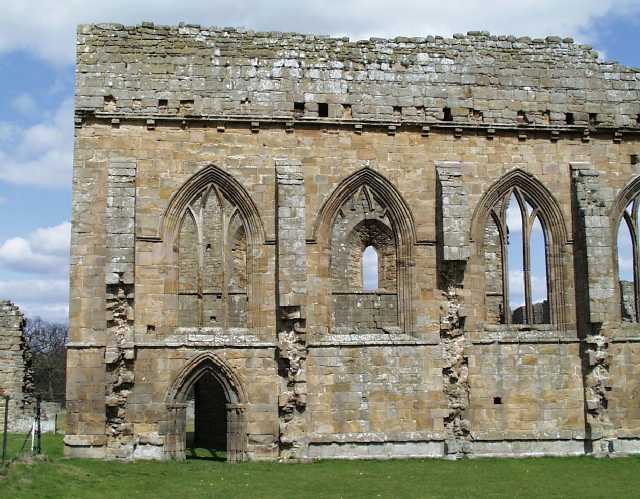
Egglestone Abbey © DCC 2002
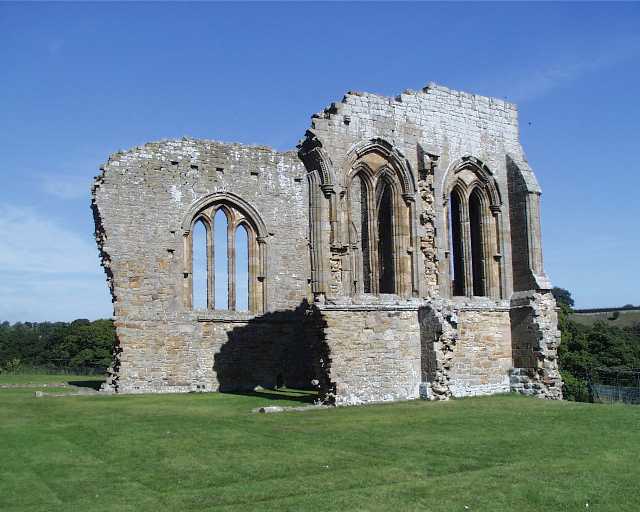
Egglestone Abbey © DCC 2003
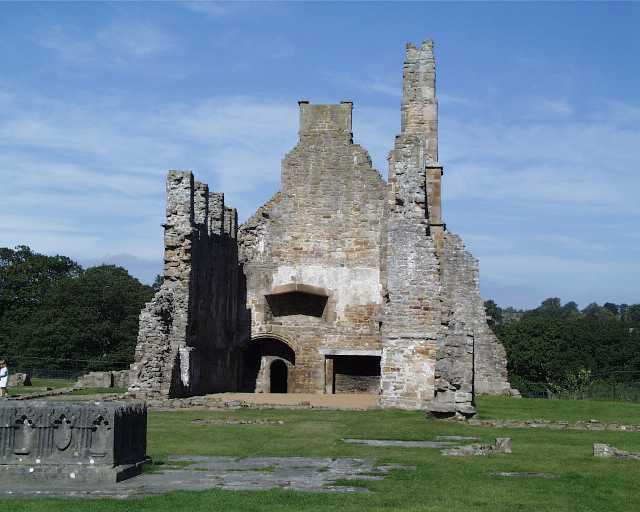
Egglestone Abbey © DCC 2003
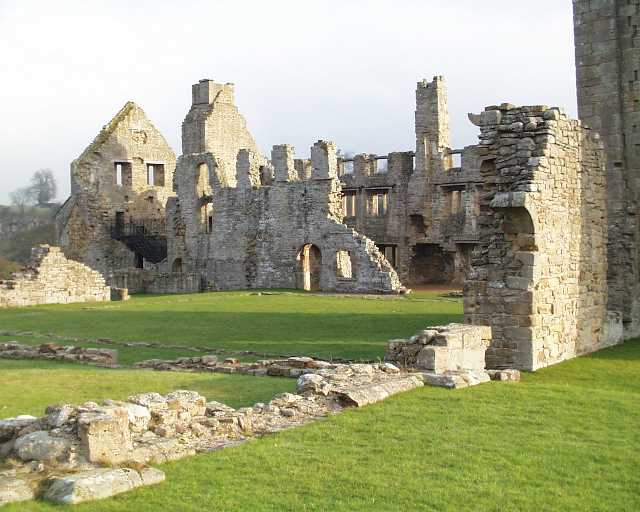
Egglestone Abbey © DCC 2003
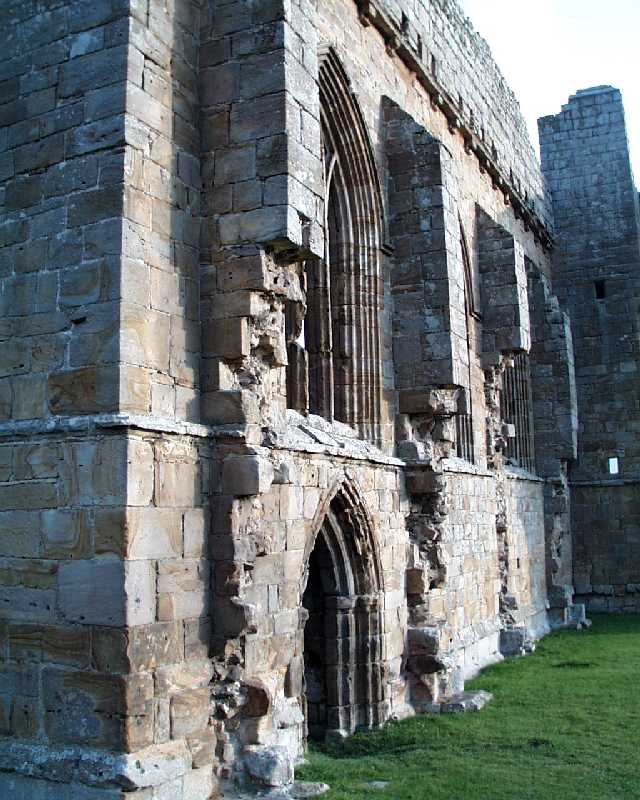
Egglestone Abbey © DCC 2003
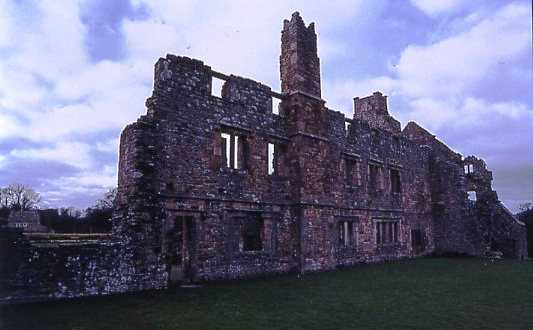
Egglestone Abbey © DCC 2007
The now ruined Egglestone Abbey was founded between 1195 and 1198 for a small number of Premonstratensian canons from Easby Abbey near Richmond in North Yorkshire. It was impoverished throughout its existence; a state that was exacerbated by its location in the Borders where it was ravaged by the Scots in 1315 and by the English in 1348. The abbey was dissolved by Henry VIII in 1540 and in 1548 it was granted to Robert Strelley who began its conversion into a secular residence. After a series of secular owners, it was sold in 1770 to John Morritt of Rokeby in whose family it remained until being placed in State care in 1925.
The buildings were partly demolished in 1905 so the stone could be used to build some stables at Rokeby Hall.
The standing remains show that the monastery did not conform to the most common layout. Instead of the abbey church forming the north range of the cloister, it forms the south range and is offset to the east so that the remaining cloister buildings lie in a square to the north west of the nave and north transept. The church's offset position is due to it being rebuilt in the mid-late 13th century. The original late 12th century church was much smaller. In the late 15th century, the roof was altered. In addition to the chapter house, located next to the north transept of the church, the east cloister range included a two-storeyed structure built in the early 13th century. This contained the canons dormitory and, on the ground floor, what is believed to be the infirmary. The standing remains of the north clositer are almost entirely of late 12th or early 13th century date and include the canons' refectory and warming house. The west cloister range was built in two phases; the early and late 13th century. The late 13th century range includes an undercroft used for storage and cellarage. To the west of the standing abbey remains are a series of earthworks representing the possible sites of ancillary buildings. The site is in the care of English Heritage.
The buildings were partly demolished in 1905 so the stone could be used to build some stables at Rokeby Hall.
The standing remains show that the monastery did not conform to the most common layout. Instead of the abbey church forming the north range of the cloister, it forms the south range and is offset to the east so that the remaining cloister buildings lie in a square to the north west of the nave and north transept. The church's offset position is due to it being rebuilt in the mid-late 13th century. The original late 12th century church was much smaller. In the late 15th century, the roof was altered. In addition to the chapter house, located next to the north transept of the church, the east cloister range included a two-storeyed structure built in the early 13th century. This contained the canons dormitory and, on the ground floor, what is believed to be the infirmary. The standing remains of the north clositer are almost entirely of late 12th or early 13th century date and include the canons' refectory and warming house. The west cloister range was built in two phases; the early and late 13th century. The late 13th century range includes an undercroft used for storage and cellarage. To the west of the standing abbey remains are a series of earthworks representing the possible sites of ancillary buildings. The site is in the care of English Heritage.
This is a Scheduled Monument protected by law. It is also a Listed Building protected by law.
D36861
Post Medieval (1540 to 1901)
Georgian (1714 to 1830)
Victorian (1837 to 1901)
Early 20th Century (1901 to 1932)
Medieval (1066 to 1540)
Georgian (1714 to 1830)
Victorian (1837 to 1901)
Early 20th Century (1901 to 1932)
Medieval (1066 to 1540)
Listed Building
• National Heritage List for England Entry Number: 1322741
Scheduled Monument
• National Heritage List for England Entry Number: 1011642
• National Heritage List for England Entry Number: 1322741
Scheduled Monument
• National Heritage List for England Entry Number: 1011642
Excavation at Egglestone Abbey Gatehouse 2000; Brigantia archaeological practice
Earthwork Survey Egglestone Abbey 2000; English Heritage DOI:1055450
RCHME: Durham SAMs Project 1991; Royal Commission on the Historical Monuments of England
Watching brief at Egglestone Abbey, County Durham 2015; Northern Archaeological Associates Ltd
EGGLESTONE ABBEY
Earthwork Survey Egglestone Abbey 2000; English Heritage DOI:1055450
RCHME: Durham SAMs Project 1991; Royal Commission on the Historical Monuments of England
Watching brief at Egglestone Abbey, County Durham 2015; Northern Archaeological Associates Ltd
EGGLESTONE ABBEY
Disclaimer -
Please note that this information has been compiled from a number of different sources. Durham County Council and Northumberland County Council can accept no responsibility for any inaccuracy contained therein. If you wish to use/copy any of the images, please ensure that you read the Copyright information provided.