• Skip to primary navigation
  • Skip to main content

Keys To The Past

MENUMENU
  • Search the Records
  • Sites to Visit
    • Anglo-Saxon Sites
    • Medieval Sites
    • Post Medieval Sites
    • Prehistoric Sites
    • Roman Sites
    • Favourite Sites
  • Local Histories
  • Get Involved
  • Overviews
  • Glossary
  • Help
You are here: Home / Search the Records / Search Results / Results of Search / Site Details

Site Details

Bradley Hall, Wolsingham (Wolsingham)

Wolsingham, Bradley Hall © B. Vyner 2007
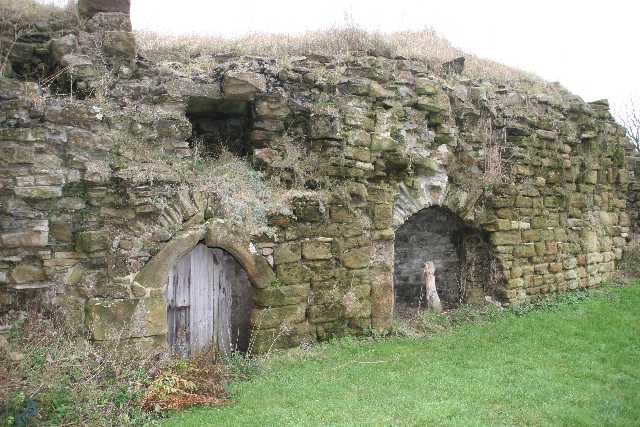

Wolsingham, Bradley Hall © Ryder, P 2006
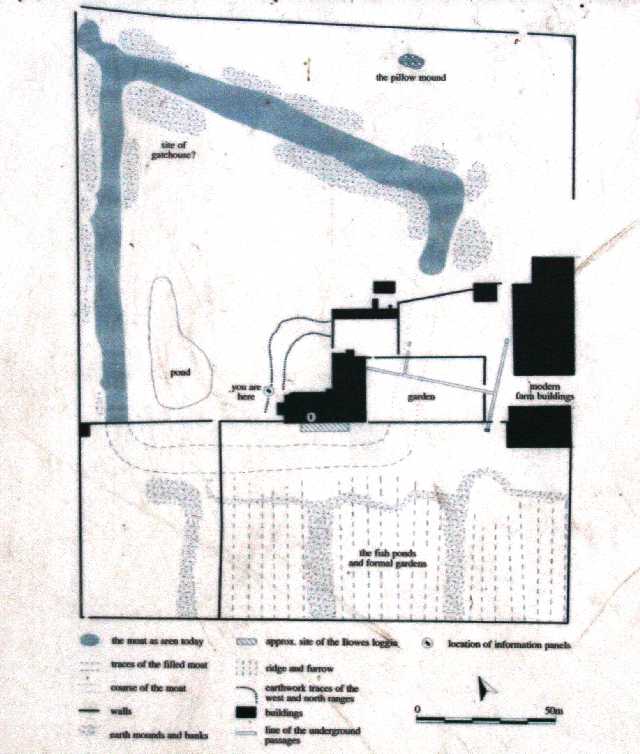

Wolsingham, Bradley Hall © Ryder, P 2007
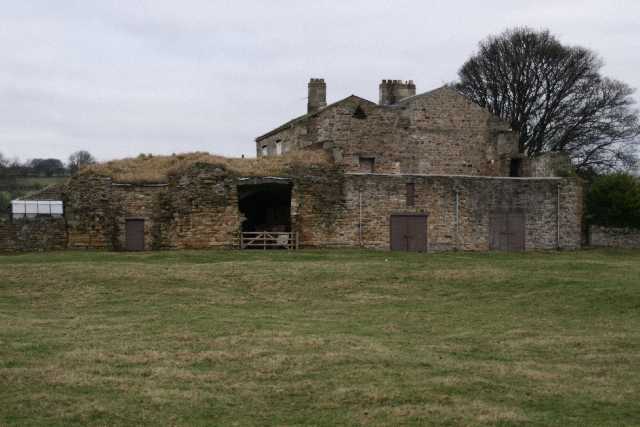

Wolsingham, Bradley Hall © Ryder, P 2006
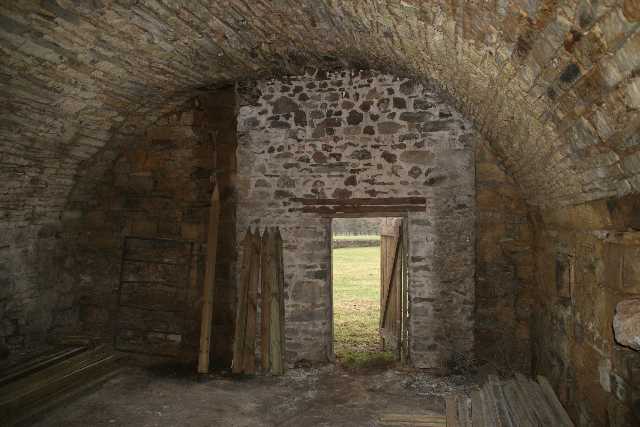
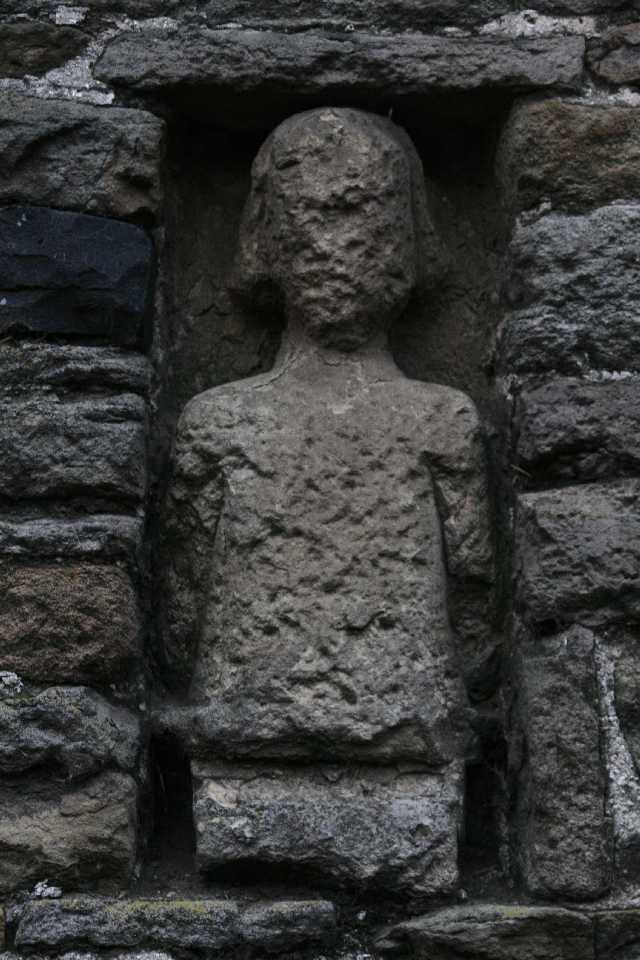
Wolsingham, Bradley Hall © Ryder, P 2006
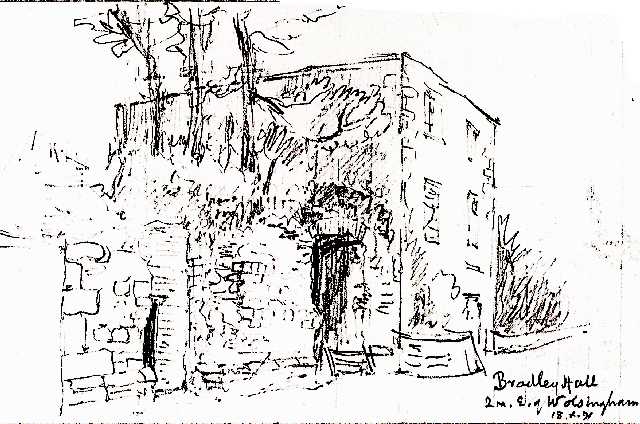
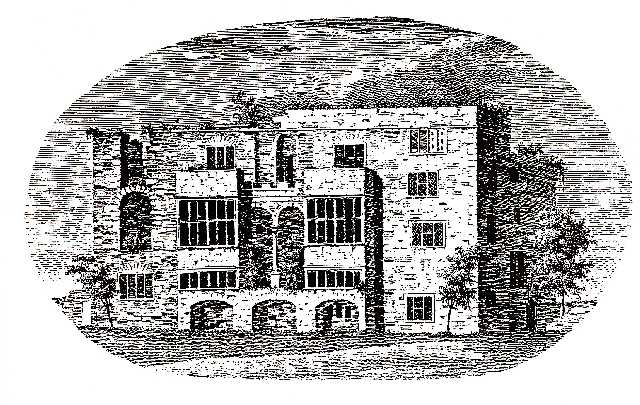
Wolsingham, Bradley Hall © Ryder, P 2006
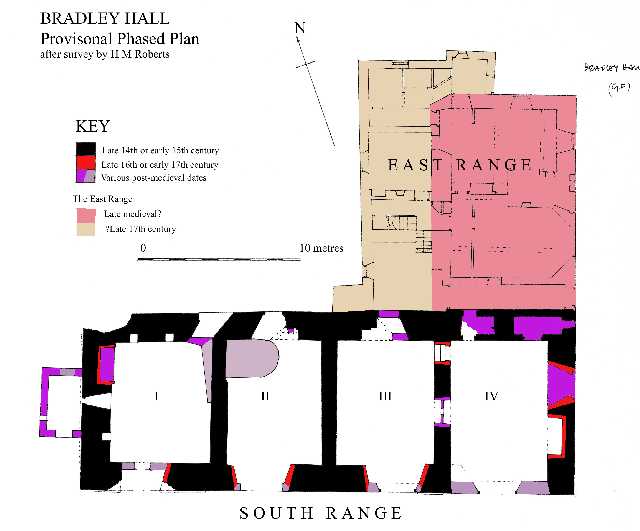

Wolsingham, Bradley Hall © Ryder, P 2006

Wolsingham, Bradley Hall © Ryder, P 2006

Wolsingham, Bradley Hall © Ryder, P 2006
Licence to fortify Bradley Hall was granted by Bishop Langley in 1431. Outside the building is the remains of a moat and possible fishponds. At the time of the Boldon Book survey (1183) Bradley was held by a family of the same name, but by the 14th century it had passed to the Eures of Witton-le-Wrear; in 1431 Sir William Eure obtained a licence to crenellate the house. It later passed to the Tempest family, but after their involvement in the 1569 Rebellion it was granted to Sir George Bowes of Streatlam, who was probably responsible for a major remodelling of the building; his grandson, another Sir George (d.1643) styled himself 'of Bradley'. With the decline of the Bowes family Bradley Hall became a farm and was let out to tenants; by the late 18th century the Elizabethan mansion was a roofless shell. At some time the eastern half of the south range was patched up and re-roofed, but this was demolished (apart from the extant basements) in 1895, reducing the remains to very much their present condition.

The four barrel-vaulted compartments are thought to be the oldest portion of the house

The adjacent northeast block appears to be an C18 addition. The interior west wall of the Medieval structure contains what may be an original fireplace. In the exposed portion of the north wall is a pointed doorway, above which is a square window. West of the doorway are the remains of another opening which passed through the wall at an angle - now blocked. There are two other pointed doorways in the north wall, and traces of a possible third. All are now blocked. There is an ancient fireplace in the east wall.

Of the C17 house built over the two eastern vaults of the Medieval building, only fragments of the east and west walls remain. The fortified building appears to have occupied the south angle of an enclosure consisting of two ramparts of earth and stone, with a Medieval ditch which served as a moat.

It is a scheduled ancient monument and a listed building.

D1793
Medieval (1066 to 1540)
Scheduled Monument
  • National Heritage List for England Entry Number: 1019821
Defensible Buildings in County Durham Survey 2005 - 2006; Peter Ryder, Historic Building Consultant
Geophysical Survey at Bradley Hall, Wolsingham 1993; Department of Archaeology, University of Durham
Survey of the Buildings and Earthworks at Bradley Hall, Wolsingham 1992; Cleveland County Archaeology Section
Evaluations at Bradley Hall, Wolsingham 1996; Tees Archaeology
Building Recording and Monitoring, Bradley Hall, Weardale 1995; Cleveland County Archaeology Section
Watching Brief at Bradley Hall, Wolsingham 1998; Tees Archaeology
Watching brief on land at Bradley Hall, Wolsingham, Weardale; Alan Williams Archaeology doi:1053046


Source of Reference
Local History of Wolsingham

Disclaimer -

Please note that this information has been compiled from a number of different sources. Durham County Council and Northumberland County Council can accept no responsibility for any inaccuracy contained therein. If you wish to use/copy any of the images, please ensure that you read the Copyright information provided.

Top of Page

Contact us | Useful links | Legal Information | Accessibility Statement | Acknowledgements

© 2021 Durham County Council and Northumberland County Council